
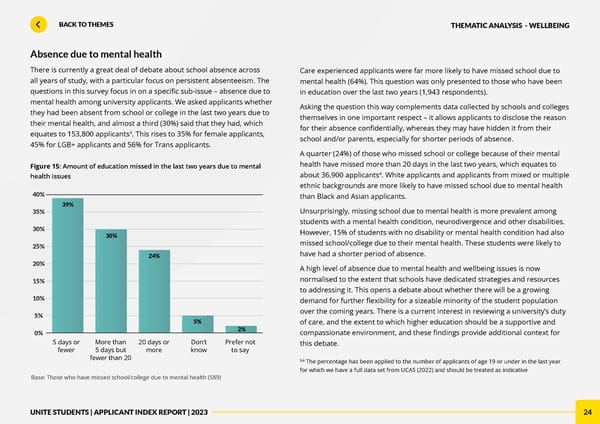
24 BACK TO THEMES U NITE STUDENTS | APPLICANT INDEX REPORT | 2023 24 BACK TO THEMES Absence due to mental health There is currently a great deal of debate about school absence across all years of study, with a particular focus on persistent absenteeism. The questions in this survey focus in on a specific sub-issue – absence due to mental health among university applicants. We asked applicants whether they had been absent from school or college in the last two years due to their mental health, and almost a third (30%) said that they had, which equates to 153,800 applicants 3 . This rises to 35% for female applicants, 45% for LGB+ applicants and 56% for Trans applicants. 3,4 The percentage has been applied to the number of applicants of age 19 or under in the last year for which we have a full data set from UCAS (2022) and should be treated as indicative Care experienced applicants were far more likely to have missed school due to mental health (64%). This question was only presented to those who have been in education over the last two years (1,943 respondents). Asking the question this way complements data collected by schools and colleges themselves in one important respect – it allows applicants to disclose the reason for their absence confidentially, whereas they may have hidden it from their school and/or parents, especially for shorter periods of absence. A quarter (24%) of those who missed school or college because of their mental health have missed more than 20 days in the last two years, which equates to about 36,900 applicants 4 . White applicants and applicants from mixed or multiple ethnic backgrounds are more likely to have missed school due to mental health than Black and Asian applicants. Unsurprisingly, missing school due to mental health is more prevalent among students with a mental health condition, neurodivergence and other disabilities. However, 15% of students with no disability or mental health condition had also missed school/college due to their mental health. These students were likely to have had a shorter period of absence. A high level of absence due to mental health and wellbeing issues is now normalised to the extent that schools have dedicated strategies and resources to addressing it. This opens a debate about whether there will be a growing demand for further flexibility for a sizeable minority of the student population over the coming years. There is a current interest in reviewing a university’s duty of care, and the extent to which higher education should be a supportive and compassionate environment, and these findings provide additional context for this debate. 5 days or fewer More than 5 days but fewer than 20 20 days or more Don’t know Prefer not to say Figure 15 : Amount of education missed in the last two years due to mental health issues Base: Those who have missed school/college due to mental health (589) 39% 30% 24% 5% 2% 40% 35% 30% 25% 20% 15% 10% 5% 0% THEMATIC ANALYSIS - WELLBEING
 Unite Applicant Index Report 2023 Page 23 Page 25