
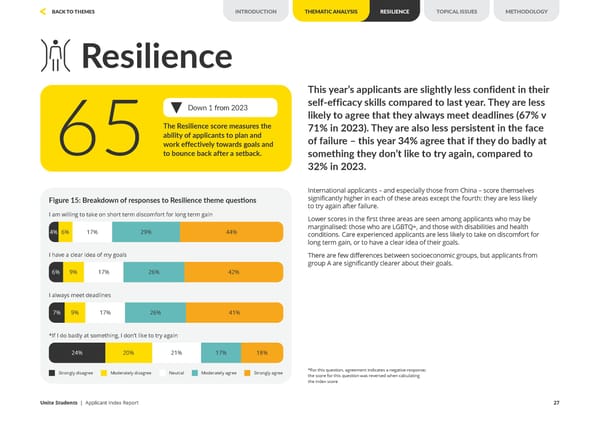
Resilience International applicants – and especially those from China – score themselves significantly higher in each of these areas except the fourth: they are less likely to try again after failure. Lower scores in the first three areas are seen among applicants who may be marginalised: those who are LGBTQ+, and those with disabilities and health conditions. Care experienced applicants are less likely to take on discomfort for long term gain, or to have a clear idea of their goals. There are few differences between socioeconomic groups, but applicants from group A are significantly clearer about their goals. *For this question, agreement indicates a negative response; the score for this question was reversed when calculating the index score I am willing to take on short term discomfort for long term gain I have a clear idea of my goals I always meet deadlines *If I do badly at something, I don’t like to try again 20% 21% 17% 18% Strongly disagree Moderately disagree Neutral Moderately agree Strongly agree Figure 15: Breakdown of responses to Resilience theme questions The Resilience score measures the ability of applicants to plan and work effectively towards goals and to bounce back after a setback. Down 1 from 2023 65 This year’s applicants are slightly less confident in their self-efficacy skills compared to last year. They are less likely to agree that they always meet deadlines (67% v 71% in 2023). They are also less persistent in the face of failure – this year 34% agree that if they do badly at something they don’t like to try again, compared to 32% in 2023. 6% 9% 17% 26% 24% 6% 17% 29% 4% 44% 42% 7% 9% 17% 26% 41% Unite Students | Applicant Index Report 27 INTRODUCTION THEMATIC ANALYSIS RESILIENCE METHODOLOGY TOPICAL ISSUES BACK TO THEMES
 Unite Applicant Index Report 2024 Page 26 Page 28