
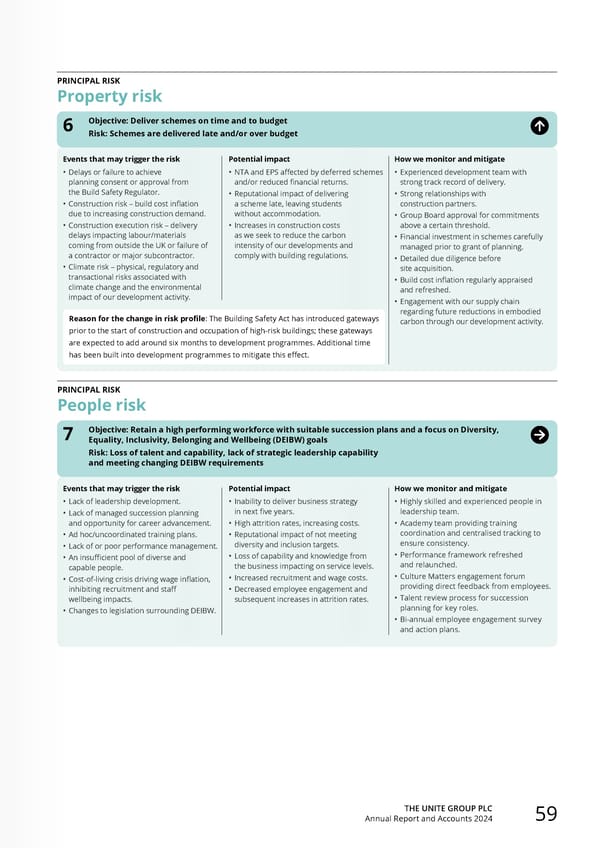
THE UNITE GROUP PLC Annual Report and Accounts 2024 59 Events that may trigger the risk • Delays or failure to achieve planning consent or approval from the Build Safety Regulator. • Construction risk – build cost inflation due to increasing construction demand. • Construction execution risk – delivery delays impacting labour/materials coming from outside the UK or failure of a contractor or major subcontractor. • Climate risk – physical, regulatory and transactional risks associated with climate change and the environmental impact of our development activity. Potential impact • NTA and EPS affected by deferred schemes and/or reduced financial returns. • Reputational impact of delivering a scheme late, leaving students without accommodation. • Increases in construction costs as we seek to reduce the carbon intensity of our developments and comply with building regulations. How we monitor and mitigate • Experienced development team with strong track record of delivery. • Strong relationships with construction partners. • Group Board approval for commitments above a certain threshold. • Financial investment in schemes carefully managed prior to grant of planning. • Detailed due diligence before site acquisition. • Build cost inflation regularly appraised and refreshed. • Engagement with our supply chain regarding future reductions in embodied carbon through our development activity. PRINCIPAL RISK Property risk 6 Objective: Deliver schemes on time and to budget Risk: Schemes are delivered late and/or over budget Events that may trigger the risk • Lack of leadership development. • Lack of managed succession planning and opportunity for career advancement. • Ad hoc/uncoordinated training plans. • Lack of or poor performance management. • An insufficient pool of diverse and capable people. • Cost-of-living crisis driving wage inflation, inhibiting recruitment and staff wellbeing impacts. • Changes to legislation surrounding DEIBW. Potential impact • Inability to deliver business strategy in next five years. • High attrition rates, increasing costs. • Reputational impact of not meeting diversity and inclusion targets. • Loss of capability and knowledge from the business impacting on service levels. • Increased recruitment and wage costs. • Decreased employee engagement and subsequent increases in attrition rates. How we monitor and mitigate • Highly skilled and experienced people in leadership team. • Academy team providing training coordination and centralised tracking to ensure consistency. • Performance framework refreshed and relaunched. • Culture Matters engagement forum providing direct feedback from employees. • Talent review process for succession planning for key roles. • Bi-annual employee engagement survey and action plans. PRINCIPAL RISK People risk 7 Objective: Retain a high performing workforce with suitable succession plans and a focus on Diversity, Equality, Inclusivity, Belonging and Wellbeing (DEIBW) goals Risk: Loss of talent and capability, lack of strategic leadership capability and meeting changing DEIBW requirements Reason for the change in risk profile: The Building Safety Act has introduced gateways prior to the start of construction and occupation of high-risk buildings; these gateways are expected to add around six months to development programmes. Additional time has been built into development programmes to mitigate this effect.
 Home for Success: Unite Students Annual Report 2024 Page 60 Page 62