
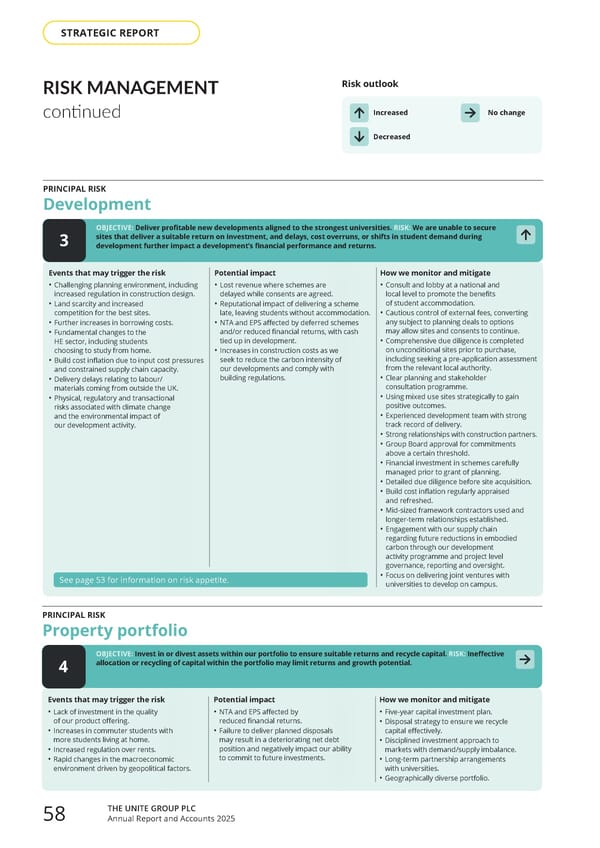
RISK MANAGEMENT continued Events that may trigger the risk • Challenging planning environment, including increased regulation in construction design. • Land scarcity and increased competition for the best sites. • Further increases in borrowing costs. • Fundamental changes to the HE sector, including students choosing to study from home. • Build cost inflation due to input cost pressures and constrained supply chain capacity. • Delivery delays relating to labour/ materials coming from outside the UK. • Physical, regulatory and transactional risks associated with climate change and the environmental impact of our development activity. Potential impact • Lost revenue where schemes are delayed while consents are agreed. • Reputational impact of delivering a scheme late, leaving students without accommodation. • NTA and EPS affected by deferred schemes and/or reduced financial returns, with cash tied up in development. • Increases in construction costs as we seek to reduce the carbon intensity of our developments and comply with building regulations. How we monitor and mitigate • Consult and lobby at a national and local level to promote the benefits of student accommodation. • Cautious control of external fees, converting any subject to planning deals to options may allow sites and consents to continue. • Comprehensive due diligence is completed on unconditional sites prior to purchase, including seeking a pre-application assessment from the relevant local authority. • Clear planning and stakeholder consultation programme. • Using mixed use sites strategically to gain positive outcomes. • Experienced development team with strong track record of delivery. • Strong relationships with construction partners. • Group Board approval for commitments above a certain threshold. • Financial investment in schemes carefully managed prior to grant of planning. • Detailed due diligence before site acquisition. • Build cost inflation regularly appraised and refreshed. • Mid-sized framework contractors used and longer-term relationships established. • Engagement with our supply chain regarding future reductions in embodied carbon through our development activity programme and project level governance, reporting and oversight. • Focus on delivering joint ventures with universities to develop on campus. OBJECTIVE: Deliver profitable new developments aligned to the strongest universities. RISK: We are unable to secure sites that deliver a suitable return on investment, and delays, cost overruns, or shifts in student demand during development further impact a development’s financial performance and returns. PRINCIPAL RISK Development 3 Events that may trigger the risk • Lack of investment in the quality of our product offering. • Increases in commuter students with more students living at home. • Increased regulation over rents. • Rapid changes in the macroeconomic environment driven by geopolitical factors. Potential impact • NTA and EPS affected by reduced financial returns. • Failure to deliver planned disposals may result in a deteriorating net debt position and negatively impact our ability to commit to future investments. How we monitor and mitigate • Five-year capital investment plan. • Disposal strategy to ensure we recycle capital effectively. • Disciplined investment approach to markets with demand/supply imbalance. • Long-term partnership arrangements with universities. • Geographically diverse portfolio. OBJECTIVE: Invest in or divest assets within our portfolio to ensure suitable returns and recycle capital. RISK: Ineffective allocation or recycling of capital within the portfolio may limit returns and growth potential. PRINCIPAL RISK Property portfolio 4 Increased Decreased Risk outlook No change See page 53 for information on risk appetite. THE UNITE GROUP PLC Annual Report and Accounts 2025 58 STRATEGIC REPORT
 Home for Success: Unite Students Annual Report 2025 Page 59 Page 61