
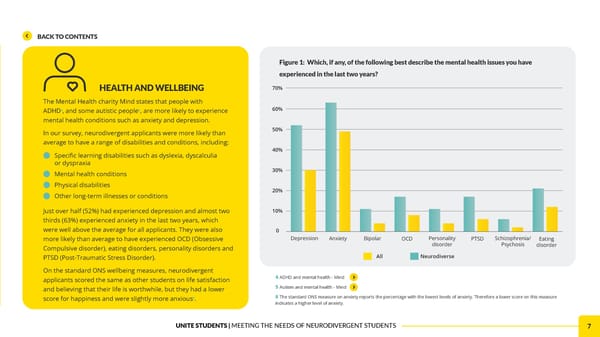
7 UNITE S T U D E N T S | MEETING THE NEEDS OF NEURODIVERGENT STUDENTS BACK TO CONTENTS The Mental Health charity Mind states that people with ADHD 4 , and some autistic people 5 , are more likely to experience mental health conditions such as anxiety and depression. In our survey, neurodivergent applicants were more likely than average to have a range of disabilities and conditions, including: ե Specific learning disabilities such as dyslexia, dyscalculia or dyspraxia ե Mental health conditions ե Physical disabilities ե Other long-term illnesses or conditions Just over half (52%) had experienced depression and almost two thirds (63%) experienced anxiety in the last two years, which were well above the average for all applicants. They were also more likely than average to have experienced OCD (Obsessive Compulsive disorder), eating disorders, personality disorders and PTSD (Post-Traumatic Stress Disorder). On the standard ONS wellbeing measures, neurodivergent applicants scored the same as other students on life satisfaction and believing that their life is worthwhile, but they had a lower score for happiness and were slightly more anxious 6 . HEALTH AND WELLBEING 4 ADHD and mental health - Mind 5 Autism and mental health - Mind 6 The standard ONS measure on anxiety reports the percentage with the lowest levels of anxiety. Therefore a lower score on this measure indicates a higher level of anxiety. Figure 1: Which, if any, of the following best describe the mental health issues you have experienced in the last two years? All Neurodiverse Depression Anxiety Bipolar OCD Personality disorder 10% 20% 30% 40% 50% 60% 70% 0 Eating disorder Schizophrenia/ Psychosis PTSD
 Neurodivergent Students Report Page 6 Page 8